Category: Yoga & Meditation
-
Siddhis and Why the Texts Warn Against Them
Yogic practice is said to produce genuine extraordinary powers along the way. Patanjali’s own text treats acquiring them as a hazard, not an achievement.
-
Bhakti Yoga: Devotion as a Complete Path
Bhakti yoga, devotion, is not the beginner’s option. Why the devotional traditions argued it is the most direct path of all.
-
Karma Yoga: Action Without the Grip of Outcome

The Gita’s most quoted line is routinely read as a licence for detachment from results. Its actual argument is more demanding than that.
-
Raja Yoga: The Royal Path of Mental Mastery

Raja yoga is the systematic training of attention set out in Patanjali’s Sutras. Its opening definition tells you the entire aim in four words.
-
Nirvikalpa Samadhi: Absorption Without a Trace of Thought

Nirvikalpa samadhi is absorption with no trace of thought, knower or known. How the tradition describes it, and why it warns against chasing it.
-
Why a Mantra Is Repeated 108 Times

Why is a mantra repeated 108 times? The mala’s 108 beads have several explanations, and the deeper question is what repetition itself is doing.
-
Nada Yoga: Liberation Through Inner Sound
Nada yoga is liberation through inner sound: listening rather than producing. The sequence of internal sounds the texts describe, and where it leads.
-
Dharana: The Concentration That Comes Before Meditation
Dharana is holding attention on one point. It is the sixth limb of yoga, and confusing it with meditation is why a great deal of practice stalls.
-
Kundalini: The Coiled Energy at the Base of the Spine
Kundalini is described as energy coiled at the base of the spine. What its rising is said to achieve, and how bluntly the texts warn against forcing it.
-
The Seven Chakras: A Map, Not a Ladder
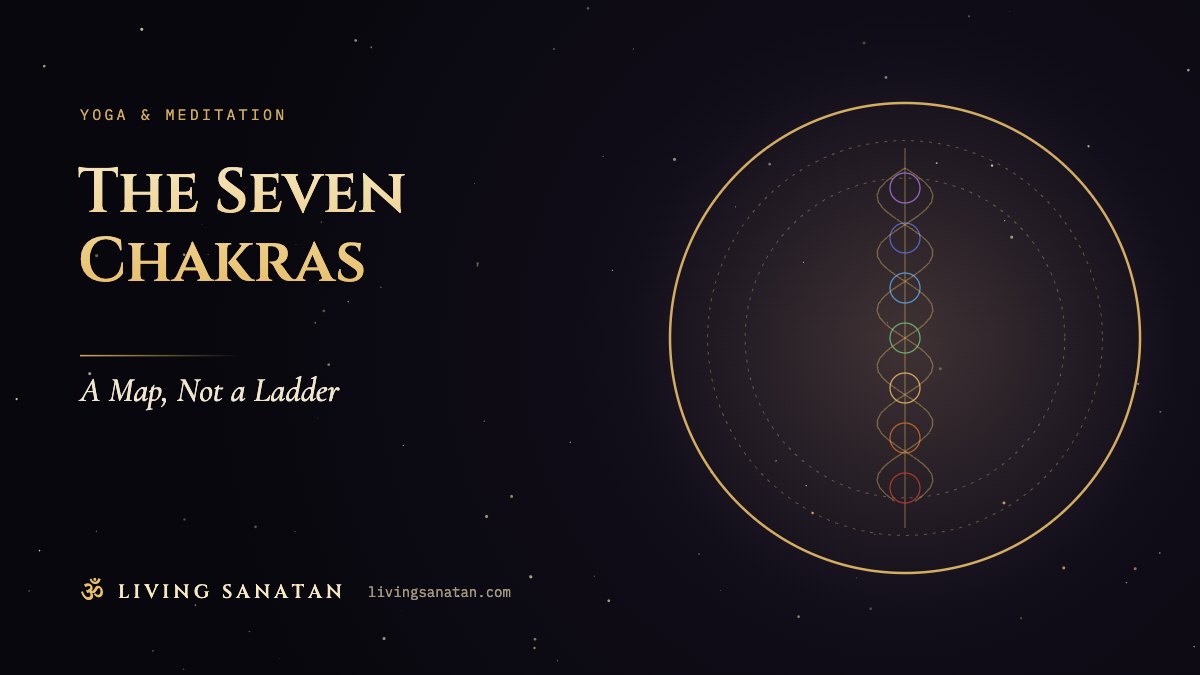
The chakras are centres in the subtle body, not organs and not levels of personal worth. Reading them as a ladder to climb misses what the map is for.
-
Ida, Pingala, and Sushumna: The Three Rivers of the Subtle Body
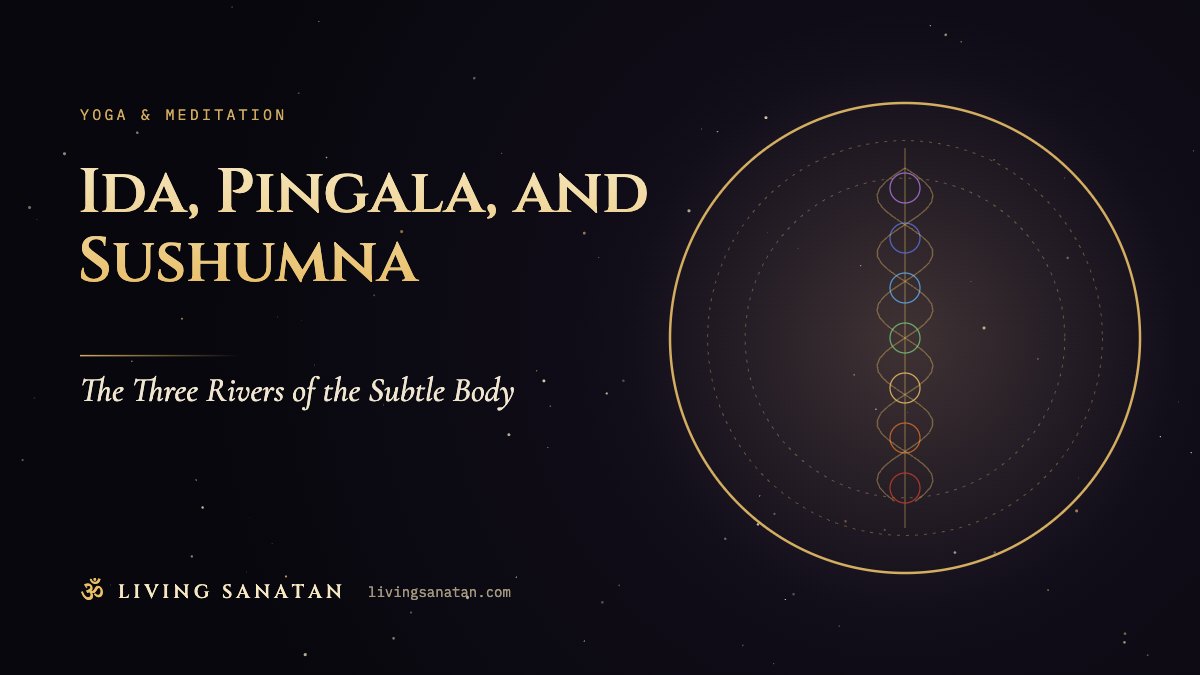
Three channels run along the spine in the yogic map. Two of them alternate all day, and the whole point of practice is to open the third.
-
The Five Pranas: How One Breath Becomes Five Functions
The five pranas, prana, apana, samana, udana and vyana, divide breath into five functions. What each one does, and why the division is practical.
-
Hatha Yoga: The Body as the First Instrument

Hatha yoga was not designed as exercise. Its original texts treat the body as the instrument to prepare before anything subtler becomes possible.
-
The Eight Limbs of Patanjali’s Yoga, One by One
Ashtanga means eight limbs, and postures are the third of them. The order is deliberate and the first two are usually skipped.
-
Yantra: The Geometry of the Divine
A yantra is sacred geometry used the way a mantra uses sound. How the Sri Yantra’s nine interlocking triangles are built, and why it is hard.
-
Vasana: Why Tendencies Outlive Their Causes
A vasana is a deep tendency that outlives the experience that made it. Why the persistence of vasanas, not memories, is the real problem.
-
Ramanuja and the Temple Doors: Philosophy as a Social Act
Ramanuja is remembered for a doctrine, and also for climbing a temple tower and shouting a secret mantra to whoever was standing below.
-
The Six Darshanas: India’s Six Classical Philosophies, Mapped
The six darshanas, Nyaya, Vaisheshika, Samkhya, Yoga, Mimamsa and Vedanta, are India’s classical philosophies. A map of what each one argues.
-
Shravana, Manana, Nididhyasana: The Three Movements of Study
Vedantic method breaks the path from hearing a teaching to living it into three distinct, necessary stages, none of which can substitute for the others.
-
Vayu: The Breath That Moves the World
Vayu, the Vedic god of wind and breath, is everywhere and almost never depicted. Why the deity of prana has no famous temple of his own.
-
Why Mantras Are Said to Work Without Being Understood
Most mantras are given without translation, and many have no propositional meaning at all. The tradition’s account of why they still function is specific.
-
The One That Breathed Without Air
Tad ekam, That One, breathed windlessly by its own power: the Nasadiya Sukta’s single positive statement, and why every word avoids saying too much.